resume.io
transforming a cancellation flow into a retention system
Resume.io is a subscription-based resume builder with high post-conversion churn typical for B2C SaaS.
I led the redesign of the cancellation experience — shifting it from a transactional flow to a structured retention and insight system. The redesign improved renewal rates and introduced measurable retention signals across segments.
Resume.io · SaaS
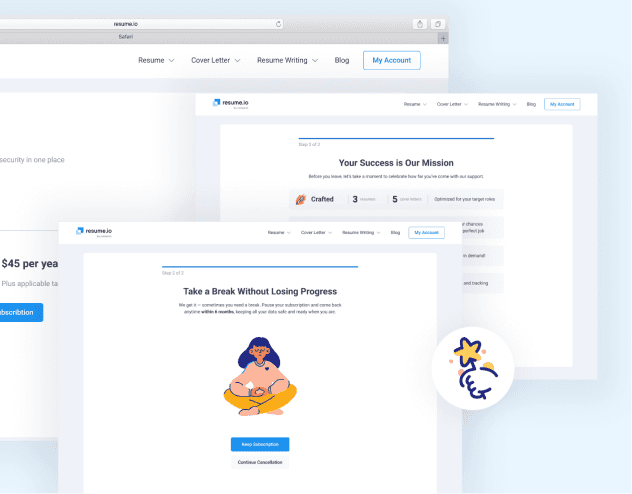
goal
Redesign cancellation to reduce churn while preserving user trust.
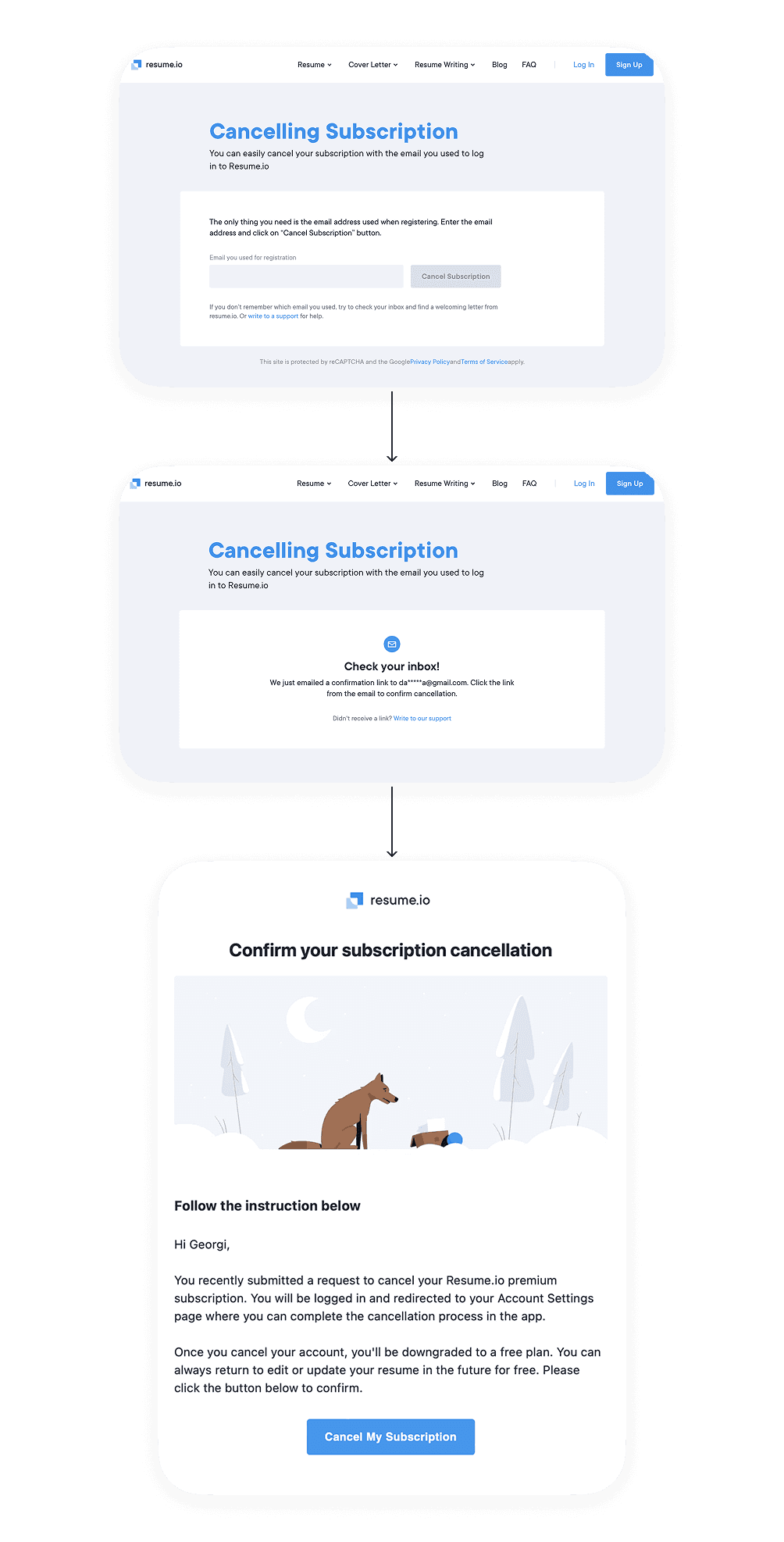
original system
The existing cancellation flow was transactional:
• saw a ~5% drop-off for full users
• no structured reason capture
• no behavioral segmentation
Cancellation was treated as an exit, not a diagnostic moment.
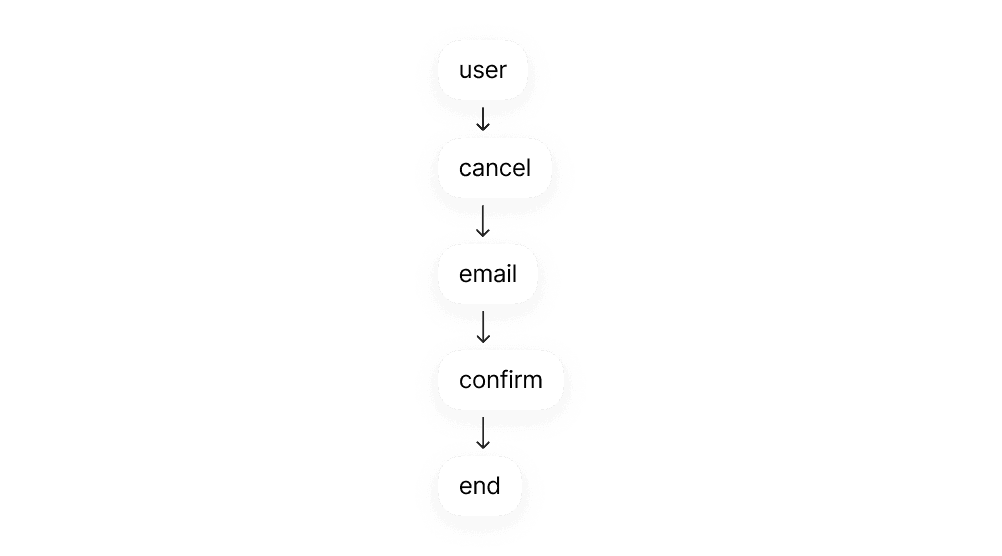
reframing the decision point
Instead of redesigning a single screen, I reframed cancellation as a high-intent signal:
from “prevent the user from leaving”
to “understand why a leaving user leaves”
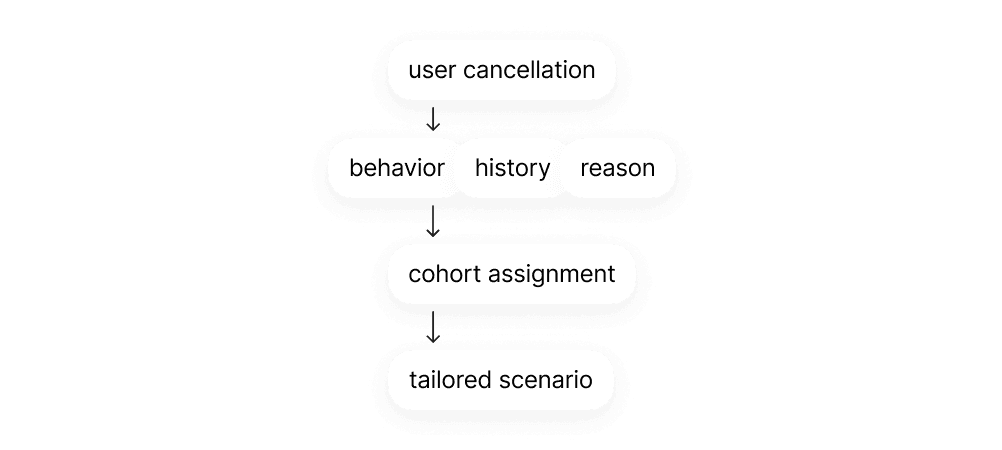
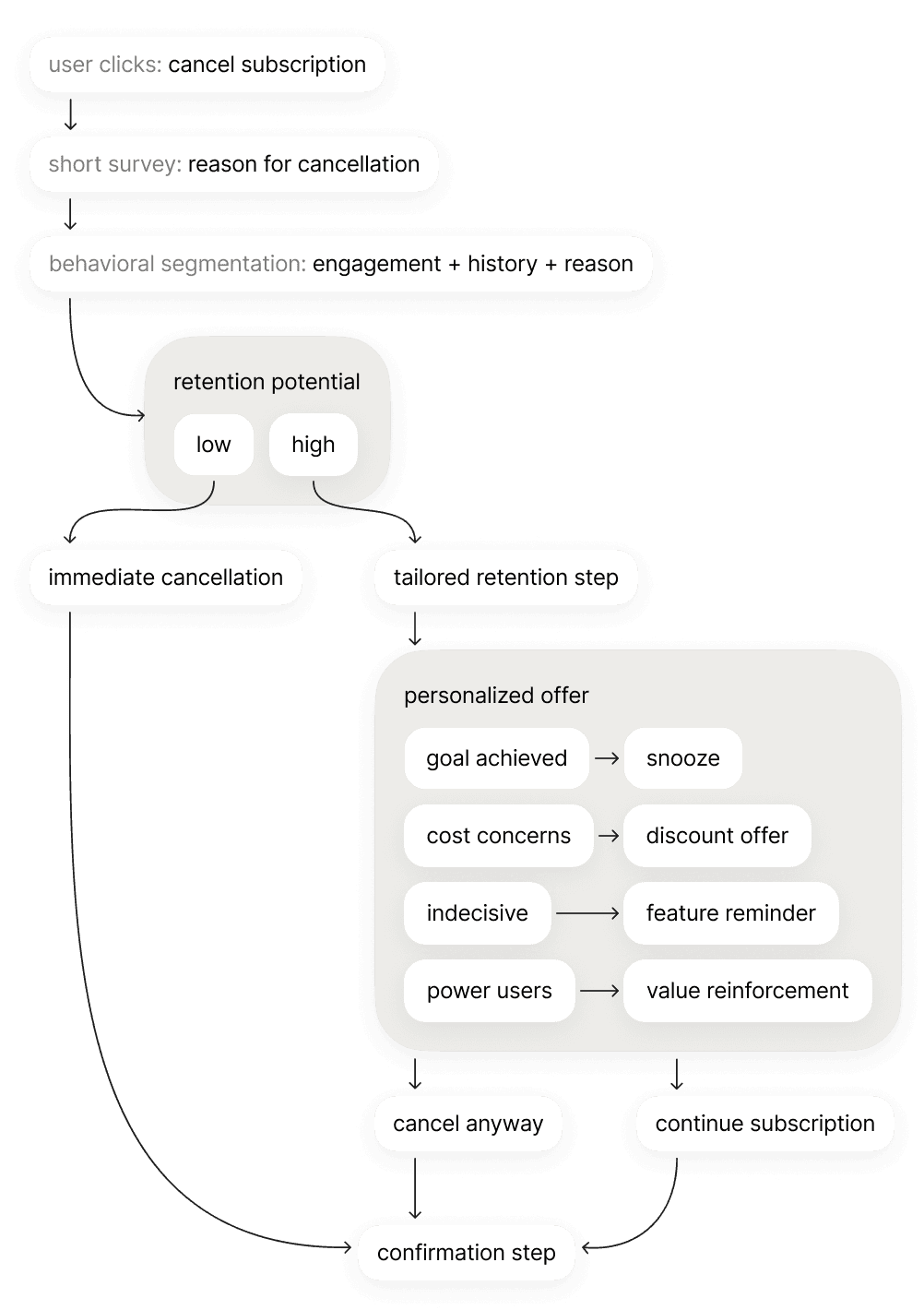
segmentation logic
Users were segmented using three signals:
• engagement level
• subscription history
• stated cancellation reason
This enabled behavioral segmentation instead of a universal retention flow, allowing tailored interventions based on context.
cohort scenarios
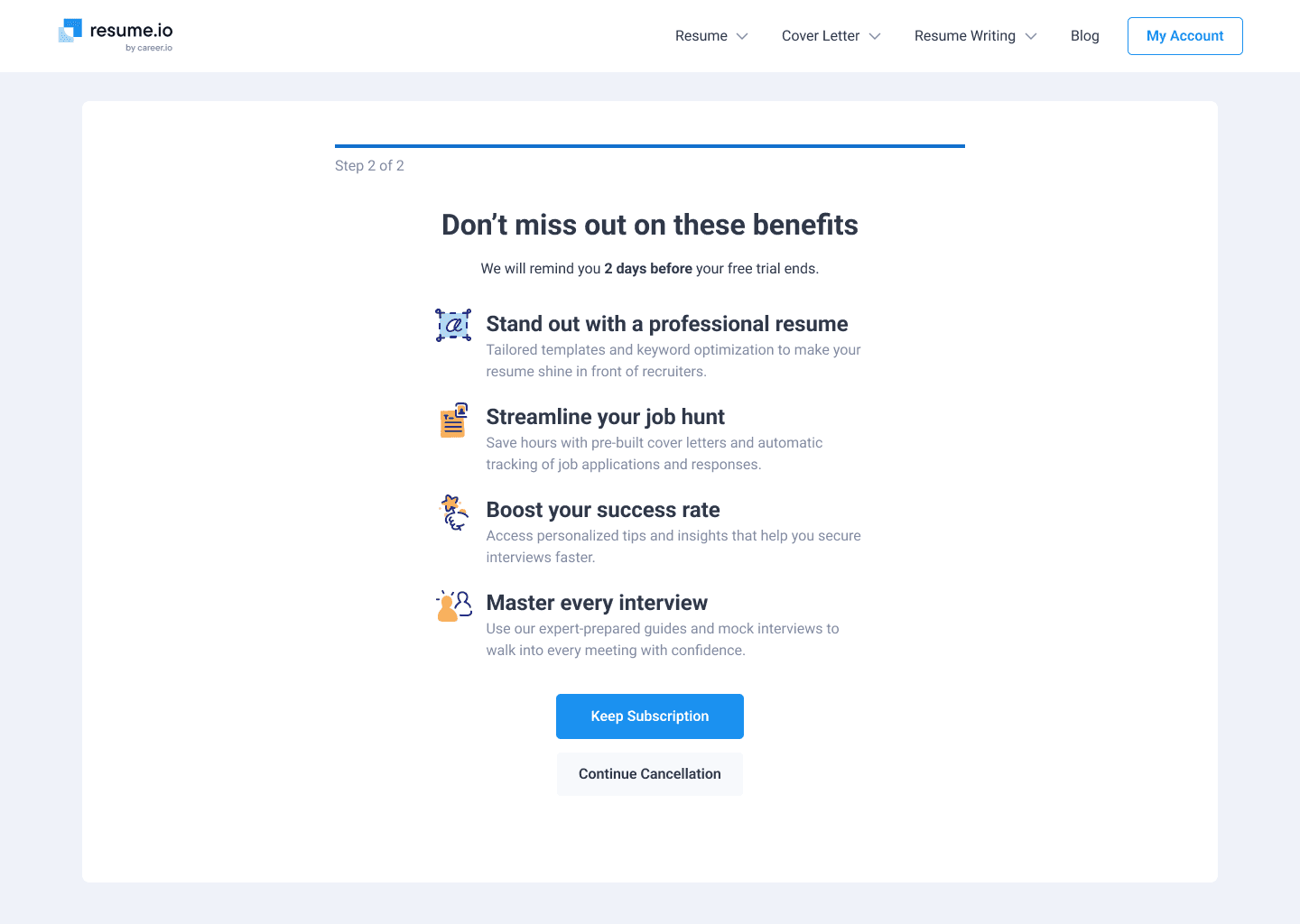
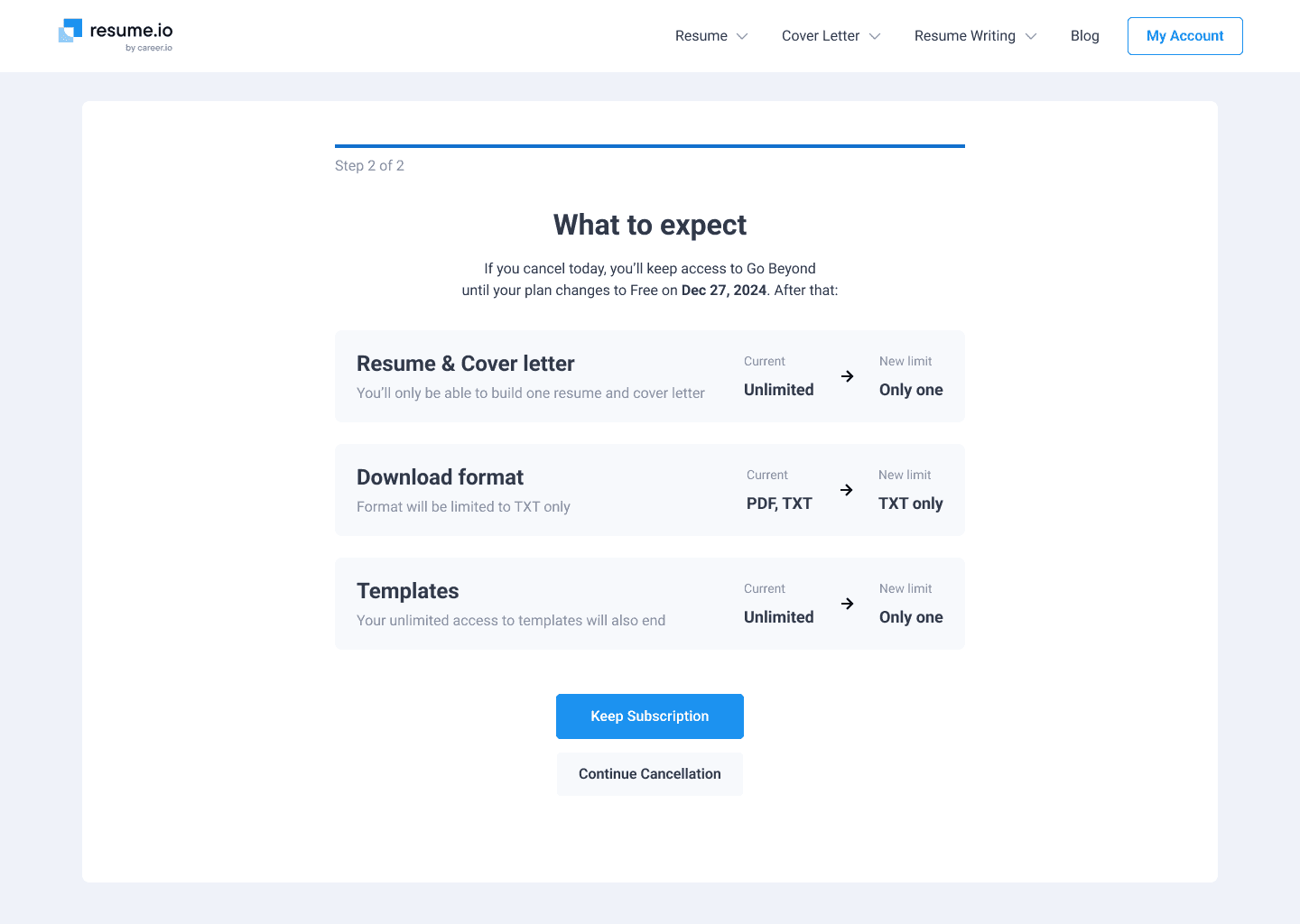
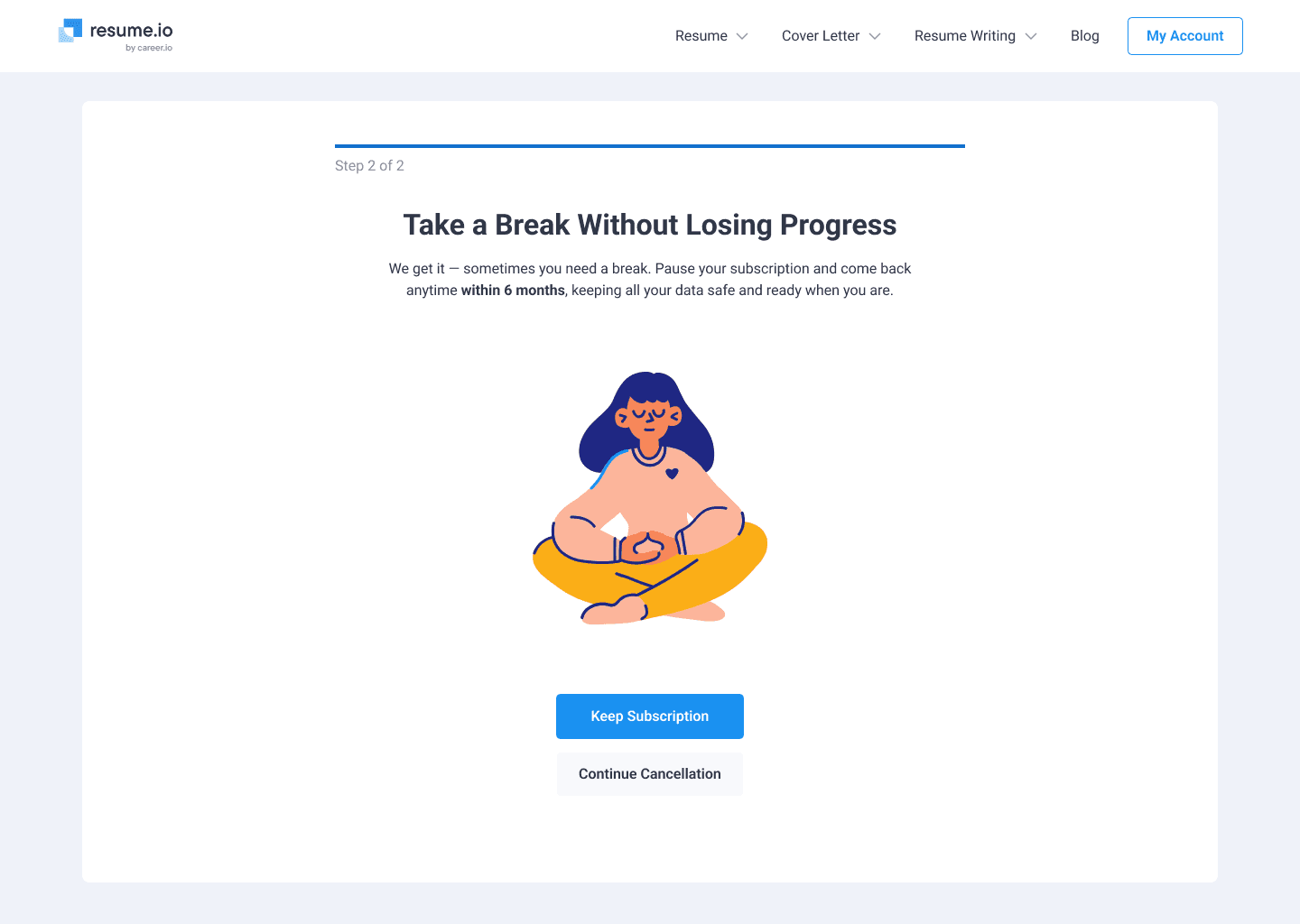
Four retention paths were defined:
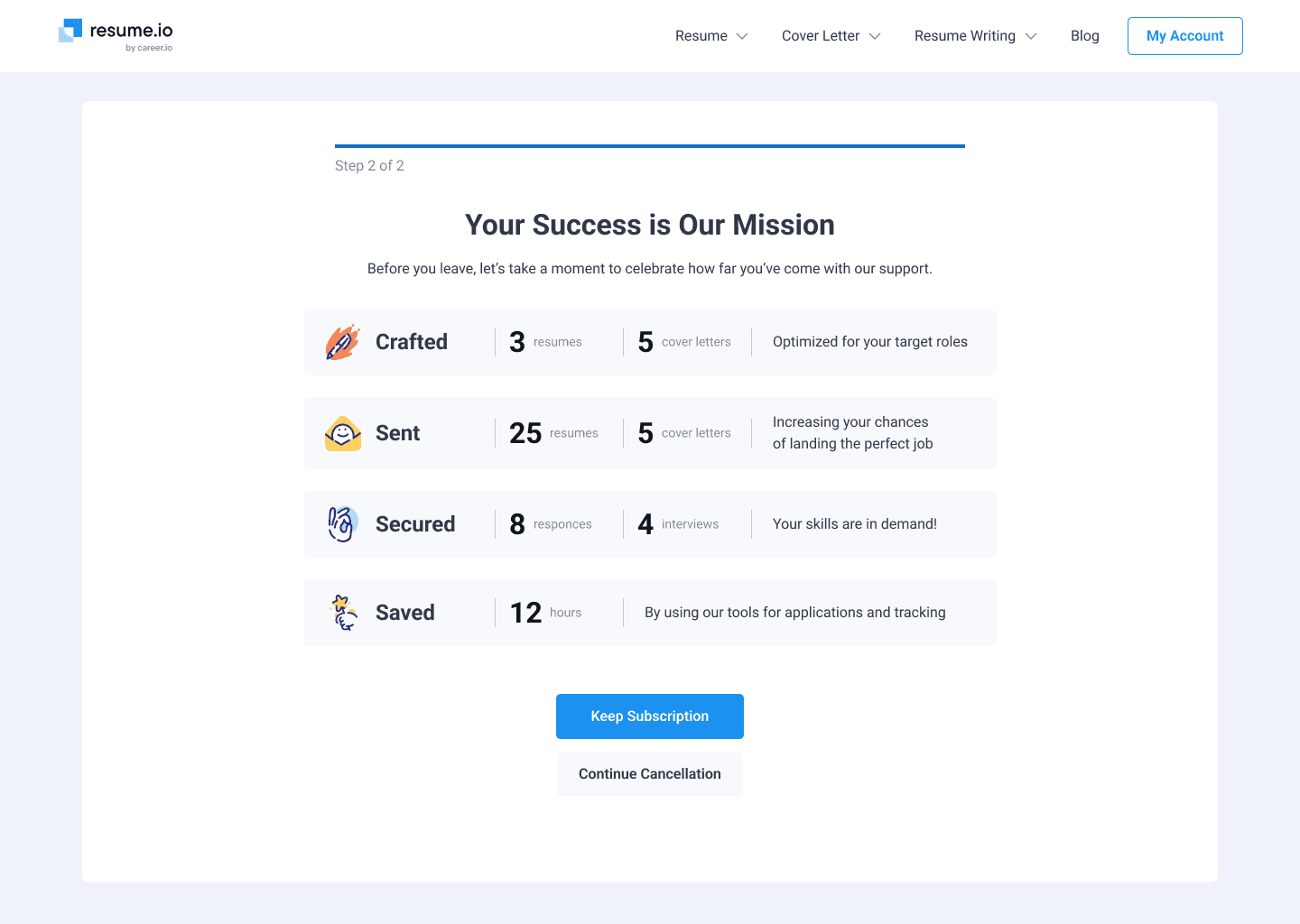
Goal achieved → Pause option
offering a flexible resource instead of exitCost concerns → Targeted discount
logic with clear incentivesLow engagement → Feature reminder
messaging and contextual guidanceHigh engagement → Value reinforcement
and progress framing
Each stage combined contextual messaging with targeted incentives.
structural shift
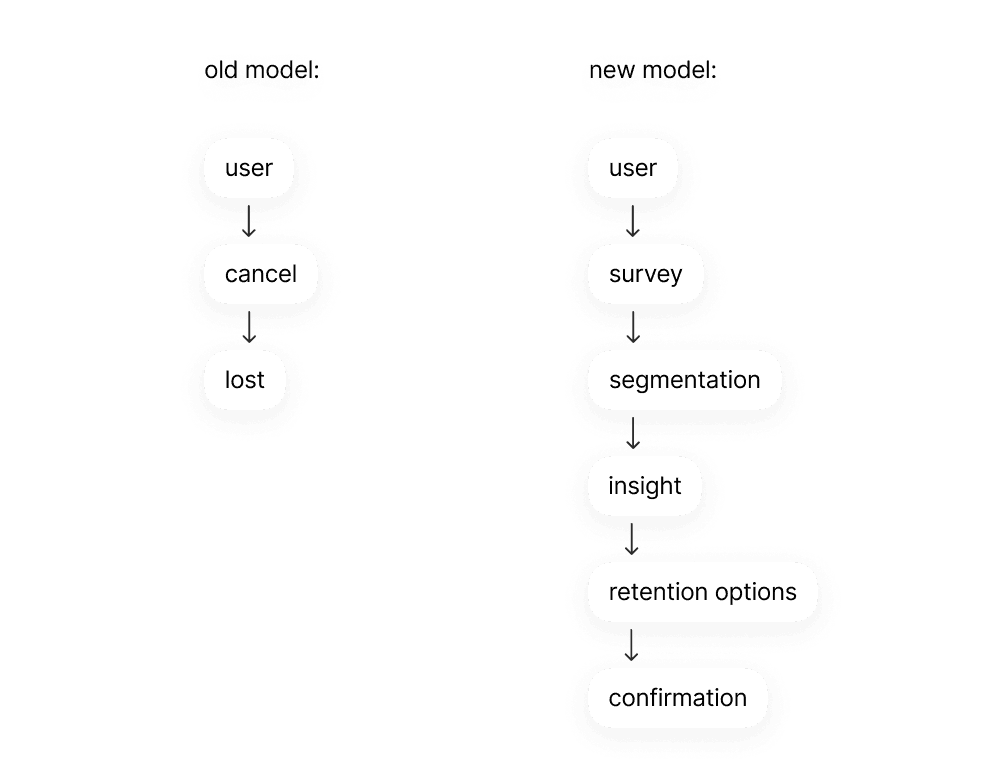
Cancellation evolved from a confirmation flow into a structured retention system. This enabled the business to:
• capture structured qualitative churn data
• introduce behavioral segmentation logic
• run controlled retention experiments over time
Instead of losing users blindly, churn became measurable and actionable.
impact
The redesign introduced measurable retention signals and improved renewal performance across key segments:
• improved renewal rate
• reduced blind churn loss
• structured churn insights
• improved retention messaging alignment with industry benchmarks
reflection
The key shift was treating cancellation as a decision system rather than a UI flow — enabling measurable retention outcomes and structured experimentation.